
Local Guide
Storm and Ice Debris Cleanup in Hardin County
NWS Louisville publishes a tornado climatology for this county: 24 events since 1890. The verified record, what a container solves after a storm, and what the City's brush truck will not take.
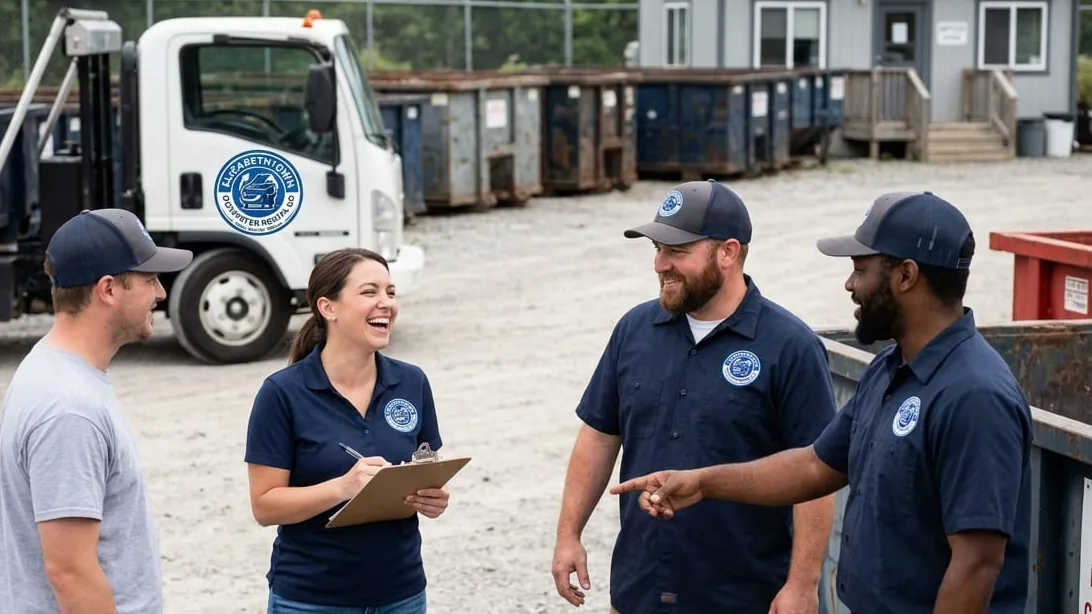
The forecast office for Hardin County is National Weather Service Louisville, not Paducah. That sounds like trivia until you are refreshing a page at eleven o’clock at night. NWS Louisville’s warning area covers “49 counties across central Kentucky and 10 counties across south central Indiana,” and every county this company serves — Hardin, LaRue, Grayson, Meade, Nelson, Bullitt, Hart and the rest — is inside it. Bookmark weather.gov/lmk and delete the other one.
What follows is what the record actually says about severe weather in this county, what Kentucky’s own regulations call the debris it leaves, and how the cleanup sorts into piles. We have been careful with the claims, and where the record is ambiguous we say so instead of borrowing somebody else’s disaster.
What the record says about Hardin County
The good news for anyone who wants a straight answer is that the NWS office covering this county publishes a tornado climatology for this county. Not for the region. For Hardin County.
Its numbers, as published: 24 tornado events between 1890 and 2018 — two rated F4 or EF4, three F3 or EF3, seven F2 or EF2, nine F1 or EF1 and two F0 or EF0 — with 20 deaths and 231 injuries over that period. The deadliest on the list is 27 March 1890, which NWS describes as “probably a family of tornadoes” that “leveled many miles of forest.”
That is a 128-year, agency-published, county-specific record. It is a better foundation than any general statement about tornado alleys.
3 April 1974 — the Super Outbreak
The benchmark event for this part of Kentucky. NWS Louisville records the outbreak’s worst local tornado as an F5 that crossed Breckinridge and Meade counties and into Harrison County, Indiana, with 31 deaths and 270 injuries. It touched down southwest of Hardinsburg and devastated Brandenburg, where NWS records “128 homes were completely destroyed, many of them levelled and swept away,” thirty businesses destroyed, and 28 of the 31 deaths.
In Hardin County itself, The News-Enterprise’s fiftieth-anniversary account records two deaths in the county, about 68 residents treated at hospital with sixteen admitted, and damage at Elizabethtown, at Franklin Crossroads and at Rineyville — including Rineyville Elementary School, where “practically every window” was shattered.
Brandenburg is one of the towns this company serves, and what happened there in 1974 is still the reference point for what a single afternoon can do in this region.
31 October 2018 — the most recent confirmed one, and it was close
NWS Louisville’s damage survey confirms an EF-1 tornado in Hardin County on 31 October 2018, on the ground from 5:39 to 5:43 in the evening, with estimated peak winds of 100 mph, a path 2.5 miles long and a maximum width of 80 yards. It touched down about two miles south-southwest of Rineyville and moved generally east. No injuries and no deaths.
What it did is the useful part, because it is exactly the debris profile this page is about: outbuildings destroyed, roofs and siding damaged, a travel trailer pushed onto a vehicle, metal roofing scattered across fields, and one home’s front porch torn away with its roofing thrown into the back yard.
A Halloween-evening EF-1 four miles up the road is a more honest anchor for this market than any dramatic statistic borrowed from somewhere else.
December 2021 — and the paragraph we are not going to write
The December 2021 outbreak was a western Kentucky catastrophe: Mayfield, Princeton, Dawson Springs, and a tornado that tracked 165 miles across four states, a Kentucky state record and one of the longest continuous paths on record anywhere.
It came closer to this county than most people remember. The same tornado crossed the Rough River eleven times through Grayson and Breckinridge counties, both of which border Hardin. Grayson County took an EF4 that night. Hart County took an EF2. Leitchfield is the Grayson County seat and Munfordville is the Hart County seat, and both are places we serve.
We could not confirm a tornado inside Hardin County itself that night, and we are not going to claim one. Sources conflict; NWS Louisville has no December 2021 Hardin County damage survey; and there is a town called Hardin in western Kentucky, in Marshall County, that was in the path, which is very likely where the confusion comes from. Plenty of pages will tell you Elizabethtown was hit in December 2021. We are not one of them.
January 2009 — the ice, as a regional event
Winter here is not a snow problem. Hardin County averages about five inches of snow a year. What it gets instead is ice, with December-to-February lows averaging in the low-to-mid twenties — the exact range that turns rain into a structural load.
The benchmark is late January 2009. NWS Louisville records that a wintry mix moved into southern Indiana and central Kentucky on the night of Monday 26 January 2009 and continued through Wednesday the 28th, that “ice over an inch thick was reported in many locations from the freezing rain,” and that the storm caused “Kentucky’s largest power outage on record, with 609,000 homes and businesses without power” statewide. Property damage was widespread, “due to falling trees, large tree limbs, and power lines weighed down by ice.”
Note how we have written that: as a regional event. NWS describes southern Indiana and central Kentucky, and does not name Hardin County or Elizabethtown. Hardin County sits squarely inside the area described, but we could not find a Hardin County ice thickness or a Hardin County outage count, so we are not going to invent one. What is beyond argument is the debris profile an ice storm of that kind leaves behind: an entire county’s worth of broken limbs and downed trees, over a period of weeks, in cold weather, on wet ground.
Kentucky’s own definition, and why it matters after a storm
Here is the single most useful sentence in the Commonwealth’s waste regulations for anybody cleaning up after weather. Kentucky defines construction/demolition debris, at 401 KAR 47:005, as:
“Waste resulting from the construction, remodeling, repair, and demolition of structures and roads, and for the disposal of uncontaminated solid waste consisting of vegetation resulting from land clearing and grubbing, utility line maintenance, and seasonal and storm related cleanup.”
Read it twice. Kentucky’s official definition of construction and demolition debris expressly includes storm-related cleanup and land-clearing vegetation. Many states split those into separate categories with separate rules. Kentucky does not.
That matters practically, because Kentucky permits disposal facilities in classes — contained landfills, construction and demolition debris landfills, inert landfills, residual and special waste — and the class a load can go to depends on what the load is. So “where does this go?” genuinely has a different answer for a pile of shattered fence and roofing than for the contents of a kitchen.
And note the word uncontaminated, because it does real work. A trailer-load of limbs is uncontaminated vegetation. The same trailer with two leaking fuel cans and a smashed pesticide jug in it is not, and it changes the answer.
Sorting storm debris into piles that actually work
Woody debris — and what the City will and will not take
Inside the Elizabethtown city limits, the City runs a brush collection program. Before you drag anything to the curb, know its limits, in the City’s own words. It takes “debris resulting from trees and shrubs which have been pruned or trimmed at residential and small commercial properties”; the material must be “less than twelve (12) inches in diameter and/or five (5) feet in length”; brush goes “within twelve (12) feet of the street curb line” without blocking lanes, sidewalks, drainage, utilities or mailboxes; and collection runs on “a four (4) week rotating schedule” across four service areas, in effect since 1 October 2024.
Now the two sentences that decide most storm cleanups. The program “does not include collection of cut trees and shrubs or debris resulting from the clearing of land,” and oversized material “must be delivered to the Public Works Facility at 1600 Nicholas Street.” And: “Licensed contractors must remove and dispose of debris from their own work professionally.”
A tree that came down in a storm is a cut tree, not a pruning. On a four-week rotation, in a county-wide event, with a size limit of twelve inches and five feet. That is the honest gap a container fills, and it is why yard waste removal and storm work are usually the same call here. Confirm the current rotation and any storm-period changes with Public Works, (270) 737-7890.
The fall leaf pick-up program is separate, is fall only, wants bagged leaves in clear bags under fifty pounds, and asks residents to “separate brush and debris from loose leaves piles.” A mixed pile of storm debris and leaves gets left.
Structural debris
Roofing, decking, siding, soffit, fence panels, the shed that folded, the carport that did not. This is straightforward container material and it is squarely inside Kentucky’s C&D definition. Two cautions:
- Weight, not volume, is the constraint on anything with shingle in it. A storm-damaged roof is a tear-off with extra steps, and a tear-off never goes in a 30 or a 40. The roof tear-off sizing guide explains why.
- Wet is heavier. Carpet, drywall, insulation and pressed-board furniture that have been rained on are dramatically heavier than the same material dry, and there is no dry season here — roughly fifty inches of rain a year, spread across every month. Load it and move it; do not let it sit open catching more.
The freezer that thawed during the outage
After an ice storm this is one of the most common calls in the county, and the answer is the same one that always surprises people. Elizabethtown Code § 92.031(A) makes it a violation to leave “any garbage or other material subject to decay for more than 96 consecutive hours, except in a tightly-covered metal or plastic container.” Spoiled food is exactly that, and an open roll-off is exactly not that. Bag it, and put it out with the weekly collection.
Which is worth a reminder of its own: the City of Elizabethtown does not collect household garbage. § 92.031(H)(1) points residents to “pickup and collection by sanitation companies, who possess a valid business license.” After a big outage, that schedule is the one that slips.
Fuel, generators and everything hazardous
Storms produce a hazardous pile nobody plans for: gas cans, generator oil, propane cylinders, the contents of a flooded garden shed. None of it goes in a container. Hardin County’s route for that material is an annual household hazardous waste event, and there is a specific local reason the rule is strict: Elizabethtown sits on karst. The Energy and Environment Cabinet describes karst as characterized by “the rapid movement of water through underground channels and conduits,” which “renders karst terranes sensitive to groundwater pollution”; the Kentucky Geological Survey says pollutants entering a karst aquifer are “not filtered.” Hardin County Solid Waste: (270) 360-9207.
And tires, which float and travel in high water and turn up in odd places afterward: under KRS 224.50-856 waste tires may be disposed of only “by transfer to a permitted solid waste disposal facility,” and moving more than fifty brings you inside the Commonwealth’s transporter rules. Separate pile.
Burning after a storm, inside the city limits
On the county’s rural edge, a burn pile is the traditional answer to a downed tree. Inside Elizabethtown, § 92.031(I) narrows it sharply. Burning garbage is a nuisance anywhere in the city, always. Burning debris or rubbish is a nuisance except in an approved incinerator. Only wood, tree branches and yard trimmings may be burned, and only where: the location is approved by the Fire Chief and a permit issued if required; the fire is no closer than fifty feet from any structure; it is “monitored by an adult with adequate extinguishing agent at hand”; and it is completely extinguished before anyone leaves.
The code also gives the Fire Chief power to prohibit all burning when conditions make it hazardous or the smoke objectionable — and the days after a storm, when everyone in town wants to burn the same brush at the same time, are exactly when that gets used. Elizabethtown Fire Department: (270) 765-2121.
Safety first, and then the truck
- Downed lines are not a cleanup problem. Assume every wire is live, keep away from anything a limb is resting on, and call the utility. A container cannot be delivered to a driveway with a line down across it, and we will not try.
- Call 811 before any repair that goes into the ground — a replacement fence post, a footing, a re-set mailbox. Dial 811 or file at kentucky811.org: two full working days minimum, ticket good for 21 calendar days, 18-inch tolerance zone either side of a mark with hand-digging inside it.
- Photograph everything before you move it. Whatever your insurer needs, they need it before the debris is in a box.
- Be realistic about delivery windows after a county-wide event. When one storm hits everybody at once, every container in the region is spoken for, and some roads are not passable. We would rather tell you a real day than a comfortable one. Same-day service is sometimes possible; after a widespread event, assume it is not.
The dumping problem, and the fee nobody knows about
The weeks after a big storm are when illegal dumping spikes, because everyone has more debris than they have plan. Two things worth knowing.
First, inside the city, § 92.031(E) makes it a violation to dump garbage, debris or rubbish on any premises in the city “with or without the consent of the owner or possessor of the premises” — and § 92.030 makes any violation of that subchapter a public nuisance. Permission from a friend with a back lot does not make it lawful.
Second, the money. Kentucky charges an environmental remediation fee of $1.75 per ton on waste disposed in the Commonwealth, under KRS 224.43-500. It funds the Kentucky Pride Fund, which pays to remediate closed solid waste facilities and to eliminate illegal open dumps. Every legally disposed ton in Hardin County pays into that fund. Every illegally dumped ton does not — and then the fund pays to clean it up anyway. That is the whole argument, and it does not require a single word of moralizing.
Who to call, by where you are standing
- Inside Elizabethtown: City Hall (270) 765-6121; Public Works (270) 737-7890; Fire (270) 765-2121.
- Radcliff (270) 351-4714; Vine Grove (270) 877-2422. Their own rules, which we do not assume match anyone else’s.
- Unincorporated Hardin County: Planning & Development Commission (270) 769-5479; Solid Waste (270) 360-9207.
- A state route — US 31W, US 62, US 31E, I-65, the parkways: KYTC District 4, Elizabethtown, (270) 766-5146.
- On Fort Knox: federal land, and the installation’s own rules apply.
- Statewide emergency information: Kentucky Emergency Management.
The short version
- NWS Louisville is your office. Not Paducah.
- The county record: 24 tornadoes, 1890–2018. The 1974 Super Outbreak and a confirmed EF-1 near Rineyville on 31 October 2018 are the local anchors.
- Winter risk here is ice. The January 2009 storm is the regional benchmark.
- Kentucky’s C&D definition covers storm cleanup and land-clearing vegetation — if it is uncontaminated.
- City brush collection will not take a storm-felled tree, and contractors must remove their own debris.
- No fuel, no oil, no propane, no tires in the box.
- Spoiled food is not container material — § 92.031(A).
- Burning inside the city is narrow and the Fire Chief can stop it entirely.
Call (270) 900-6891 with the address and roughly what came down, and we will tell you the size and the earliest honest day. More on yard waste removal, demolition debris and roll-off rentals, and in the City clean-up and brush guide.
Questions this guide did not answer? Call (270) 900-6891. We would rather spend two minutes on the phone than have you order the wrong container.